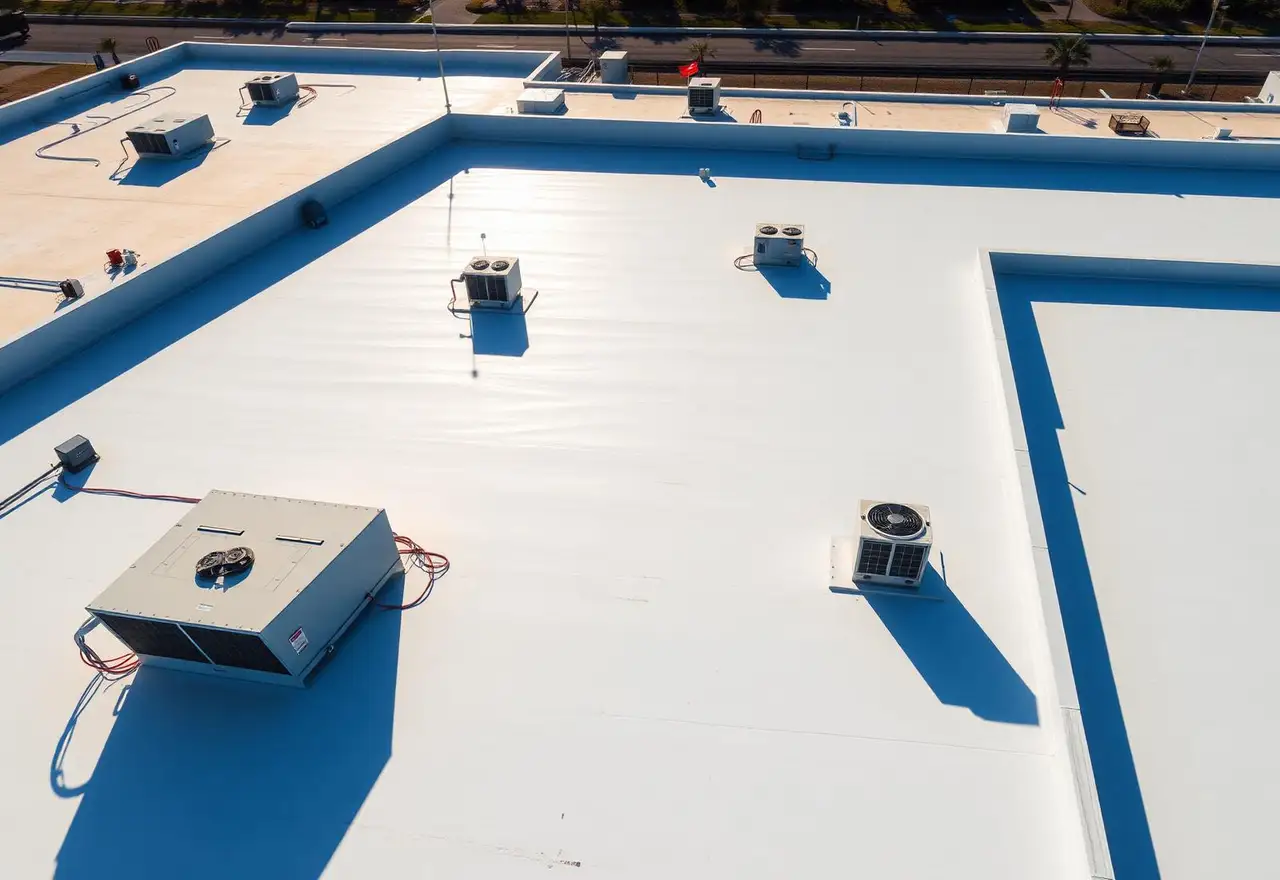
Ponding Water on a Flat Roof: When to Worry and How to Fix It Right
Ponding water that lingers longer than 48 hours after rain is a warranty violation on most TPO and modified bitumen systems and the leading cause of premature membrane failure in Florida. The fix is rarely more membrane. It is tapered insulation, scupper enlargement, or a properly placed drain.
How long is too long for water to sit on a flat roof?
48 hours after rainfall stops is the industry threshold. Most manufacturers (GAF, Carlisle, Johns Manville) explicitly call ponding longer than 48 hours a warranty exclusion. In Florida humidity, even shorter pond times accelerate UV breakdown, algae growth, and seam stress.
What causes ponding in the first place?
Three usual suspects. Inadequate slope from the original design (most common on buildings from the 1970s and 1980s). Undersized or blocked scuppers and drains. Compressed insulation under HVAC and foot traffic paths. A roof can pond for any of these reasons even when the membrane itself is in perfect shape.
Can I just add more membrane to fix it?
No. Adding membrane does not change slope. The right fix is tapered ISO insulation built up to create positive drainage, paired with enlarged scuppers or new drains where needed. Done correctly during a reroof it costs 10 to 20 percent more than flat insulation and eliminates ponding for the life of the system.
What is the cheapest interim fix while I plan a reroof?
Enlarge or unclog the scuppers, install crickets behind HVAC curbs, and add saddles at low points. None of this eliminates ponding but it can shave 24 to 36 hours off pond time and buy you 12 to 24 months. Document everything for the next contractor.
Does ponding void my insurance claim if the roof leaks?
Often yes. Carriers and manufacturers both treat ponding as a maintenance failure rather than a sudden loss. If a hurricane tears the membrane the claim is usually paid, but routine leaks from chronic ponding are typically denied. Fix the drainage and protect the asset.
- →48 hours is the manufacturer warranty line.
- →Slope, scuppers, and compressed insulation cause most ponding.
- →Tapered ISO during a reroof is the permanent fix.
- →Scupper and cricket upgrades are good 12 to 24 month interim work.
- →Chronic ponding turns into denied leak claims.
Related field notes.
TPO vs Modified Bitumen vs Metal: Which Commercial Roof Belongs on Your Florida Building?
TPO is the default for most Florida flat roofs (best cost-to-life ratio, white reflective surface, 20 to 30 year NDL warranties available). Modified bitumen still wins on small footprints and complex penetrations. Standing seam metal is the long-term play for owners who plan to hold the asset 30+ years and want hurricane-rated performance.
The Property Manager's Hurricane Prep Checklist for Florida Commercial Buildings
Hurricane prep is a 12-month job, not a June scramble. The buildings that come through named storms in the best shape do three things: inspect twice a year, secure rooftop equipment year-round, and have a contractor on call before the cone forms.
How to Actually Win a Florida Insurance Claim for Roof Damage
Most denied roof claims in Florida fail for two reasons: insufficient documentation of pre-loss condition, and confusion between cosmetic and functional damage. A contractor walk before you file separates winnable claims from claims that will hurt your premium for years.