TPO vs Modified Bitumen vs Metal: Which Commercial Roof Belongs on Your Florida Building?
TPO is the default for most Florida flat roofs (best cost-to-life ratio, white reflective surface, 20 to 30 year NDL warranties available). Modified bitumen still wins on small footprints and complex penetrations. Standing seam metal is the long-term play for owners who plan to hold the asset 30+ years and want hurricane-rated performance.
What is the most common commercial roof system in Florida?
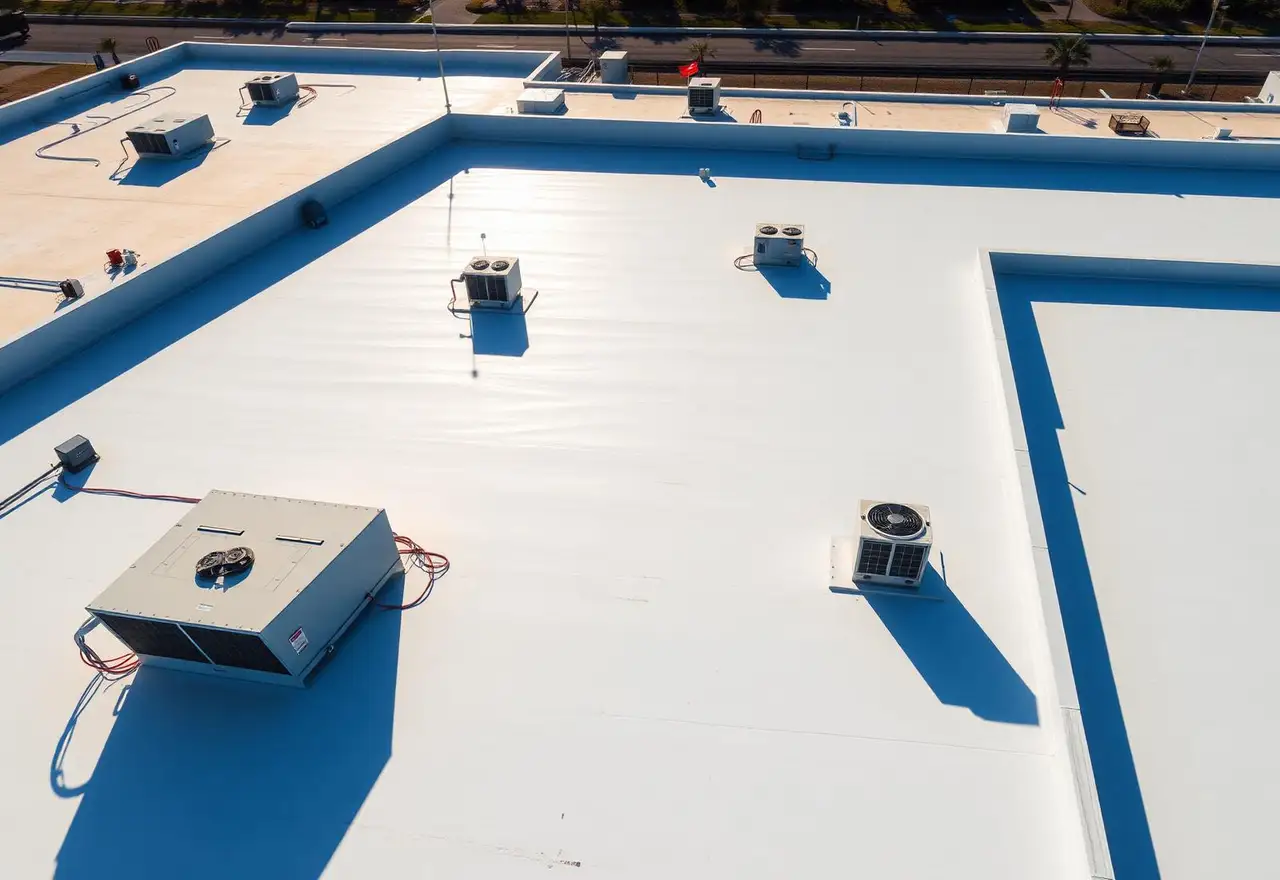
TPO (thermoplastic polyolefin) is the dominant low-slope commercial roof in Florida. It is a single-ply membrane (typically 60 or 80 mil) heat-welded at the seams. The white reflective surface drops rooftop temperatures by 50 to 70 degrees in summer, which lowers HVAC load. Expected service life is 20 to 25 years, and certified installers can write 20 to 30 year NDL (no dollar limit) manufacturer warranties from GAF or Carlisle.
When does modified bitumen still make sense?
Modified bitumen (mod-bit) is the right pick for smaller footprints under about 10,000 square feet, roofs with heavy penetration counts, and projects where tear-off costs would dominate the budget. It is a multi-ply asphalt-based system that is torch-down or self-adhered. Service life is 15 to 20 years. Repairs are simpler than TPO because patching does not require a welder.
Is standing seam metal worth the premium in Florida?
Yes, if you plan to hold the building 25+ years. Standing seam aluminum or Galvalume carries Miami-Dade NOA approvals for wind uplift, lasts 40 to 60 years, and shrugs off named storms better than any membrane. Upfront cost is 1.5 to 2.5x TPO, but lifecycle cost-per-year usually beats every other system on a long hold.
How long does a commercial reroof take?
On a typical 20,000 to 50,000 square foot single-tenant building, 10 to 25 calendar days from kickoff to final walk. Phased work around tenants adds time but rarely adds disruption when scheduled at night or in zones. Weather is the wild card from June through November.
What warranties should I ask for?
Two layers. First, manufacturer warranty on the membrane (20 to 30 years NDL from GAF or Carlisle requires a certified installer). Second, contractor workmanship warranty on installation (5 to 10 years is standard). Together they cover both the material and the seam-by-seam install for the life of the roof.
- →TPO is the default for low-slope Florida commercial roofs.
- →Choose modified bitumen for small or heavily penetrated roofs.
- →Standing seam metal wins on a 25+ year hold.
- →Always require both manufacturer NDL and contractor workmanship warranties.
- →Use a Miami-Dade NOA-approved assembly south of I-4 when possible.
Related field notes.
NDL vs Material vs Workmanship: The Three Commercial Roof Warranties Decoded
An NDL (no dollar limit) manufacturer warranty covers full repair or replacement cost for 20 to 30 years and requires a certified installer. Material warranties only cover the membrane defects, not labor. Workmanship warranties come from your contractor and cover the install. You want all three.
How to Vet a Commercial Roofing Contractor in Florida (Without Getting Burned)
The cheapest bid is almost never the cheapest project. Vet contractors on manufacturer certifications, in-house crews vs subs, COI limits, NDL warranty authority, and named-storm response track record. Five questions separate the real outfits from the ones chasing a one-time job.
How HOAs and Condos Avoid the Special Assessment Vote on Roofing
The single biggest source of special assessments in Florida HOAs and condos is deferred roof work. Reserve studies built on annual inspection data, phased reroof plans, and competitive bid panels keep monthly dues steady and avoid the assessment vote that splits a community.